North Cornwall Fairies and Legends — Context and Discussion
Edition facts
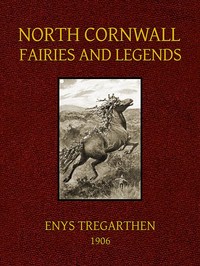
Enys Tregarthen's North Cornwall Fairies and Legends (1906) opens with a piskey searching for his laugh, a quest that immediately establishes the collection's central tension between the familiar and the strange. The stories shuttle between snug cottages and exposed moors, between the scale of a child's bed and the vastness of Dozmare Pool. Tregarthen's prose is precise about these transitions: a piskey steps onto a sleeping girl's nose 'as light as the feathers of the old Sky Woman,' and the narrative voice shifts from matter-of-fact to lyrical without warning. This note traces three structural and imagistic patterns that recur across the tales.
The Scale of the Small
Throughout the collection, Tregarthen emphasizes the physical tininess of her fairy characters. In 'The Little Cake-bird,' piskeys scramble up a fiddle-back chair and perch on a patchwork quilt, one sitting 'cross-legged like a tailor' on the child's arm. The narrator repeatedly draws attention to their size relative to everyday objects: a piskey walks across a girl's nose, another turns head over heels on a quilt. This is not mere whimsy; the smallness creates a distinct power dynamic. The piskeys are vulnerable—they worry about being forgotten at Christmas—yet they control dreams. The contrast between their miniature bodies and their influence over human sleep is the collection's most persistent structural device.
Movement Between Indoors and Out
The tales alternate between enclosed domestic spaces and open, often threatening landscapes. 'The Adventures of a Piskey in Search of his Laugh' begins in a cottage but quickly moves to 'Rough Tor's granite-piled height.' 'The Legend of the Padstow Doombar' shifts from a lifeboat crossing a bar to a mermaid's pool. Tregarthen marks these transitions with specific landmarks: Tintagel Castle, Dozmare Pool, Trebetherick Bay. The movement is rarely smooth; characters are 'piskey-laden' or chased across moors. The effect is a geography that feels both real and enchanted, where a step from a kitchen door can lead to a fairy whirlwind.
Voices Within Voices
Tregarthen layers multiple speakers within her narratives. In 'The Little Cake-bird,' the piskeys give orders to the dreaming child, who then speaks aloud in her sleep, and the grandmother responds. The narrator also interjects with dialect terms like 'croom of a cheeld' and 'whiddle.' This polyphony creates a sense of oral tradition being transcribed rather than invented. The introduction by Howard Fox notes that the tales are 'either founded on folk-lore or they are folk-lore pure and simple,' and the shifting voices reinforce that claim. The reader is never allowed to settle into a single narrative tone; instead, the text feels like a conversation overheard.
Recurring Objects and Their Transformations
Certain objects appear across multiple stories, acquiring new meanings. The 'crozan' or limpet-shell with a hole appears in the introduction as Tregeagle's futile tool. Cakes recur: the dream-cake in 'The Little Cake-bird' is described with a rhyme about 'fairy cow's cream' and 'Small People's spice,' while the child insists it is a Christmas cake. Feathers from the Old Sky Woman's sweeping fall on the moors and later become a simile for lightness. These repeated items anchor the fantastical elements in tangible things, giving the folklore a material weight. The notes at the end of the volume suggest Tregarthen was attentive to local customs, and the objects function as clues to that embedded knowledge.
Readers approaching North Cornwall Fairies and Legends will find it rewards attention to the physical details of setting and the shifts in narrative voice. The stories are short, but their structure is deliberate: each movement from indoors to outdoors, from human to fairy perspective, builds a coherent world. The collection does not explain its lore; it presents it as already known, inviting the reader to listen as if to a local storyteller. The best approach is to follow the piskeys from one tale to the next, noting how the same landscapes and objects reappear in different lights.