
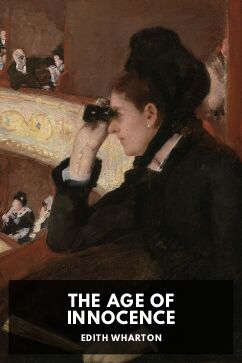
The Age of Innocence - Edith Wharton
Edith Wharton’s ‘The Age of Innocence’ won the Pulitzer Prize in 1921, and it’s easy to see why. It’s a story that feels both grand and intimately personal, set against a backdrop of velvet curtains and strict social rules.
The Story
We meet Newland Archer, a young man from a top New York family, as he announces his engagement to the lovely and conventional May Welland. Their path is set: a proper wedding, a respectable life. Everything changes with the arrival of May’s cousin, Ellen Olenska. Ellen is separated from her cruel European husband and talks about things like art and personal freedom, which makes old-money New York deeply uncomfortable. Newland is drawn to her intelligence and her refusal to play by the rules he finds so suffocating. As he falls in love with Ellen, he’s torn. Should he break his engagement, scandalize his family, and follow his heart? Or should he honor his promise and uphold the only world he’s ever known? The tension isn’t in loud arguments, but in glances across a dinner table and words left painfully unsaid.
Why You Should Read It
This book grabbed me because it’s so painfully real. Wharton doesn’t just describe fancy dinners; she shows us the quiet desperation underneath. Newland isn’t a heroic rebel. He’s a man trapped, and his prison is made of velvet. We watch him try to convince himself that his safe life with May will be enough, all while his soul is screaming for something else. Ellen isn’t just a ‘manic pixie dream girl’—she’s a woman fighting for her own survival and dignity in a society that wants to shun her. The genius is that Wharton makes you feel the weight of every polite smile and every suppressed feeling. It’s a masterclass in showing how much can be communicated through what is not said.
Final Verdict
Perfect for anyone who loves character-driven stories where the biggest battles happen inside someone’s head. If you enjoyed the emotional precision of Jane Austen or the social observation of ‘The Great Gatsby,’ you’ll find a friend in this book. It’s not a fast-paced adventure; it’s a slow, beautiful burn. You read it for the exquisite ache of understanding Newland’s dilemma and for Wharton’s razor-sharp insight into how we build cages for ourselves and call them civilization. A timeless, heartbreaking, and utterly brilliant read.
This content is free to share and distribute. Distribute this work to help spread literacy.
Steven Taylor
2 years agoI started reading out of curiosity and it challenges the reader's perspective in an intellectual way. Don't hesitate to start reading.
Noah White
11 months agoJust what I was looking for.
Linda Johnson
1 year agoThis book was worth my time since it manages to explain difficult concepts in plain English. A true masterpiece.







Christopher Torres
1 year agoThe fonts used are very comfortable for long reading sessions.