
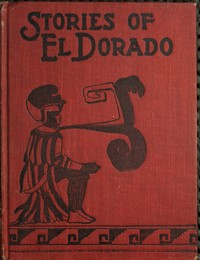
The Stories of El Dorado — Text and Context
Edition facts
Frona Eunice Wait opens The Stories of El Dorado with a bold claim: that a single culture hero, arriving by sea from the East, underlies the diverse mythologies of the Americas. Drawing on the scholarship of A. F. Bandelier, she argues that indigenous religious principles were fundamentally the same across continents, varying only in degree due to local conditions. This preface sets the tone for a work that is as much a patriotic and moral project as a folkloric one—Wait aims to lend dignity to the American continent by investing it with a mythology she considers as rich as that of antiquity. The narrative voice is earnest, occasionally didactic, and infused with a late-Victorian sensibility that seeks to elevate its subject while remaining accessible to a broad audience.
A Hero of Many Names
Wait presents El Dorado not as a place but as a man—a culture hero who taught the principles of right living. She traces his presence across tribes from the Sioux to the Brazilians, noting that oral tradition and migration have scattered his story into countless variants. The excerpts show her method: she weaves together creation accounts, moral parables, and historical anecdotes, often linking them to the Spanish conquest. For instance, she parallels the Golden Hearted—a legendary figure who gave his people laws—with Queen Isabella, who pawned her jewels to fund Columbus. This juxtaposition of myth and history is characteristic of Wait's approach, though the excerpts do not reveal how she handles the hero's specific deeds or name in each tribe.
The Voice of the Collector
Wait's prose is marked by a formal yet fervent tone. She addresses the reader directly, as when she writes, 'Does it not seem strange that the Golden Hearted and the Queen of Spain should be credited with the same desire?' Her sentences are often long and periodic, building toward moral conclusions. The narrative pace shifts between measured exposition and dramatic retelling: the account of Columbus's voyage, for example, unfolds with breathless detail—the mutinous crew, the promise of gold, the cry of 'Land! Land ahead!'—before slowing to a prayerful landing. This variation in pace keeps the reader engaged, though the excerpts suggest that Wait's own voice sometimes overshadows the myths themselves.
Gold as a Double-Edged Motif
Gold appears throughout the excerpts as both a literal treasure and a symbol of greed. Columbus promises his convict crew 'all the gold, and silver, and precious gems you can carry,' and they respond with 'cunning and greed.' Yet the native people, in Wait's telling, are 'docile and kind,' offering fruits and flowers rather than metals. This contrast underscores a central tension: the pursuit of El Dorado—whether as a golden city or a spiritual ideal—leads to exploitation, while the true wealth lies in moral living. Wait's preface hints that the stories are meant to inspire 'higher living,' and the excerpts bear this out, though the full collection likely contains more nuanced treatments of the gold motif across different tribes.
Readers approaching The Stories of El Dorado should be prepared for a work that blends folklore with personal commentary. Wait's voice is ever-present, guiding interpretation and drawing explicit moral lessons. The excerpts offer only a glimpse of the full collection's scope—eight sections covering various tribes and legends—but they reveal a consistent pattern: each story is framed as evidence of a shared human heritage. Pay attention to the moments when Wait lets the myths speak for themselves, as these passages often carry the most vivid imagery and narrative power.