East of the Sun and West of the Moon: Old Tales from the North — Reading Notes
Edition facts
The excerpts from this collection of Norwegian folktales reveal a world where bears speak, moons are consulted for directions, and old women use their noses as pokers. In the story 'Soria Moria Castle,' the hero Halvor encounters an elderly couple who have not seen 'Christian folk' in a hundred years, and the wife's nose is so long she uses it to stir the fire. Such details ground the supernatural in homely, tactile imagery.
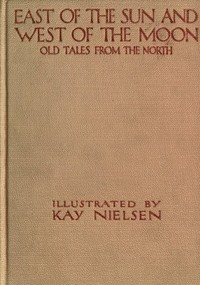
The tales, selected from the Norske Folkeeventyr of Asbjørnsen and Moe and translated by Sir G. W. Dasent, are presented here with Kay Nielsen's illustrations. The preface notes that these are not merely nursery tales but 'the romances of the childhood of Nations,' emphasizing their roots in ancient tradition.
The Hero's Relentless Quest
In the excerpt from 'Soria Moria Castle,' Halvor's journey is marked by relentless forward motion. He walks and rides 'turn and turn about' through a seemingly endless wood, stopping only when his horse grazes or he takes a snack. The narrative emphasizes his refusal to rest: 'he gave himself no more time to rest than when his horse cropped a bit of grass.' This drive is echoed in his willingness to swap his horse for a pair of boots that cover twenty miles per stride, a bargain that delights the old wife who now can ride to church.
The quest structure is typical of the collection: a protagonist leaves home against parental wishes, encounters magical helpers, and persists despite obstacles. Halvor's statement that if he cannot find the princesses 'he thought it not worth while to live' underscores the high stakes. The tale's episodic nature—meeting the Moon, then the West Wind—shows how the hero relies on personified natural forces for guidance.
Domestic Humor and the Supernatural
Several excerpts blend the fantastic with mundane domesticity. The old wife in 'Soria Moria Castle' is eager to acquire Halvor's horse so she can ride to church, a desire that undercuts the story's epic tone. Similarly, in 'The Husband Who Was to Mind the House' (listed in the contents), the title suggests a comic reversal of roles. The preface itself notes the 'grotesque yet realistic intermingling of actuality with supernaturalism' as a characteristic of the original tales.
This juxtaposition appears in small details: the old wife uses her long nose as a poker, and the hero's horse is described as 'a brave horse to ride, but he can't draw at all.' Such observations ground the extraordinary in the familiar, making the supernatural feel tangible. The tales do not dwell on the marvelous for its own sake but integrate it into everyday life, where a bear can be a mount and a pair of boots can shrink distances.
Illustration and the Visual Narrative
Kay Nielsen's illustrations are integral to this edition. The preface states that Nielsen 'fully availed himself' of the advantage of knowing the original Norwegian tales, and that his drawings 'aptly express the innermost significance' of the stories. The excerpts include a caption for an illustration: 'He too saw the image in the water; but he looked up at once, and became aware of the lovely Lassie who sate there up in the tree.' This moment, from 'East of the Sun and West of the Moon,' captures a key visual motif—reflections and misdirection.
The book's layout encourages readers to view the illustrations full-size by clicking on them, as noted in the front matter. The interplay between text and image is crucial: Nielsen's 'exquisite bizarrerie' complements the tales' blend of the quaint and the grotesque. Readers may find that the illustrations deepen the sense of otherworldliness, as when the bear carries the heroine through a 'long, long way' in the opening story.
Readers approaching this collection should note that the tales are drawn from the landmark Norske Folkeeventyr and translated by Sir G. W. Dasent, with one story ('Prince Lindworm') newly translated for this volume. The excerpts offer a sample of the collection's range, from quests to comic domestic scenes. Pay attention to how the narratives balance repetition and variation, and how the illustrations by Kay Nielsen interpret the stories' visual cues. The book rewards those who read both text and image together.